


—U.S. Dollar Near Worst Annual Loss Since 2003
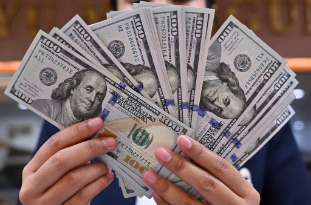
As global currency markets are reshaped by divergent economic outlooks and shifting expectations for monetary policy, the U.S. dollar is on track to have its worst annual performance in over 20 years. In light of declining U.S. inflation, closing interest rate gaps, and improving outlooks in other significant economies, investors are reevaluating the dollar's long-standing dominance. The dollar was under constant pressure all year long as U.S. inflation appeared to be slowing. One of the main pillars supporting the currency in recent years was weakened when softer price data decreased expectations for aggressive Federal Reserve tightening. The dollar's yield advantage has decreased as markets increasingly factor in possible rate reduction or extended policy pauses. Concurrently, there has been a relative improvement in economic conditions outside of the United States. Growth prospects have leveled off in several regions of Asia and Europe, which has prompted investors to shift their money to other currencies. As expectations turned toward a more balanced global monetary policy landscape, the euro, pound, and certain Asian currencies benefited. Policy difference has been a major factor in the dollar's slide, according to currency specialists. Other central banks have either kept their restrictive policies or started making policy changes that help their currencies, while the Federal Reserve suggests caution and a reliance on data. Yield-seeking investors' demand has decreased as a result of this divergence, which has reduced interest rate gaps that previously benefitted the dollar. Dollar performance has also been impacted by sentiment toward global risk. Demand for the dollar as a safe-haven asset decreased as equities markets recovered and volatility decreased. Increased confidence in the robustness of the global economy led investors to shift toward higher-yielding and growth-linked currencies. The dollar index, which compares the currency to a basket of significant rivals, has been impacted by this change. The dollar's problems were exacerbated by trade dynamics. Local currencies were supported by a stabilized global trade climate and increased export demand in emerging nations, which lessened need on the dollar for risk mitigation. In response to shifting cost structures and revenue projections, multinational firms also modified their currency exposure. The weakening of the dollar has helped emerging market currencies. A weaker dollar improves financial stability and draws in investment by relieving pressure on nations with dollar-denominated debt. Sustained dollar weakening, according to analysts, may give emerging countries some breathing room as they deal with issues of inflation and growth. Market participants warn against assuming a one-way trend despite the general drop. The dollar is still widely used in international trade and banking, and demand may be swiftly rekindled by fresh economic shocks or geopolitical unrest. Furthermore, a reevaluation of Federal Reserve policy may be prompted by any increase in U.S. inflation or faster-than-anticipated growth, which might bolster the dollar. Investors are keeping a tight eye on global central bank actions, Federal Reserve communications, and U.S. economic statistics in the future. Whether the dollar's slide continues throughout the upcoming year or levels off following its steep decline will depend heavily on the direction of inflation, labor markets, and growth. All things considered, the dollar's decline toward its worst yearly performance since 2003 is indicative of a shifting global environment. Currency markets are adapting to a more competitive and balanced environment as monetary policy trajectories diverge and investor confidence expands outside of the US.

Jeffrey E. Byrd connects the dots that most people don't even see on the same map. As the founder of Financial-Journal, his reporting focuses on the powerful currents of technology and geopolitics that are quietly reshaping global systems, influence, and power structures.
His work follows the hidden pipelines—where data, defense, finance, and emerging technology intersect. He highlights the players who move behind the curtain: governments, intelligence networks, private security alliances, and digital industries shaping tomorrow's geopolitical terrain.
Jeffrey’s mission is to give readers clarity in a world where complexity is used as strategy.
Read More