


—Safe-Haven Buying Lifts Precious Metals in Global Markets
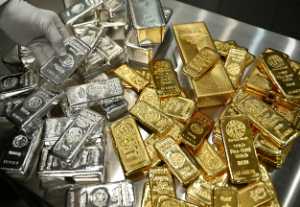
The resurgence of safe-haven interest at year-end caused precious metals markets to rise, showing a change in investor sentiment in the face of weaker U.S. yields, currency fluctuations, and persistent global uncertainty. Demand from institutional funds and long-term investors looking for stability during a tumultuous market era drove the increase in gold and silver. Following a drop in U.S. Treasury yields, which lowered the opportunity cost of keeping non-yielding assets like gold, precious metals saw an increase. Investors rebalanced their portfolios as yields decreased, boosting their exposure to assets that are typically thought of as stores of value in times of geopolitical or economic turmoil. The metals market was further helped by a declining value of the US dollar. Because precious metals are usually valued in US dollars, foreign investors find them more appealing when the currency is weaker. Because demand remained strong, this dynamic encouraged greater participation in international markets, especially from Europe and Asia. As fund managers looked to protect themselves from possible changes in monetary policy expectations, gold prices profited from consistent institutional inflows. Risk sentiment remained cautious despite the fact that inflation pressures have decreased due to uncertainties about the rate and timing of future interest rate decreases. Because of this, gold's appeal as a defensive allocation rather than a speculative move persisted. Both industrial demand and safe-haven interest helped silver post increases as well. Participants in the market saw that silver's dual status as an industrial and precious metal increased its appeal, particularly since long-term manufacturing demand was supported by hopes of gradual economic stabilization. Despite their varied performances, palladium and platinum were nevertheless supported by selective purchasing and supply limitations. Investors kept an eye on changes in industrial and automotive demand, which are important factors influencing these metals' price fluctuations. Ahead of year-end, safe-haven flows mirrored broader market posture. Investors preferred diversification techniques as bond markets adjusted to new inflation data and equity markets went through bouts of turbulence. In multi-asset portfolios, precious metals provided stability, especially for funds looking to lessen their exposure to transient market fluctuations. Maintaining demand was also influenced by geopolitical considerations. Prudent investing behavior was encouraged by ongoing tensions in strategic regions and the unpredictability of international trade ties. The persistence of geopolitical worries kept safe-haven assets in focus even as other markets saw a slight improvement in risk appetite. Precious metal price fluctuations were exacerbated by low year-end liquidity. The rally was aided by incremental buying, which had a bigger effect on prices when trading volumes were lower. Although year-end movements may be overstated, analysts warned that macroeconomic fundamentals continue to support the underlying demand trend. Market players anticipate that precious metals will continue to be sensitive to incoming economic data and central bank communications in the future. The demand for safe-haven assets may be strengthened by any additional indications of slowing growth or changes in monetary policy assumptions. On the other hand, gains can be restrained by a significant yield recovery or a higher currency. All things considered, the precious metals rally demonstrated a resurgence of investor interest in defensive assets. Precious metals remain a key component of portfolio protection strategies as markets negotiate a complicated combination of global dangers, policy uncertainty, and lowering inflation signals as the new year approaches.

Jeffrey E. Byrd connects the dots that most people don't even see on the same map. As the founder of Financial-Journal, his reporting focuses on the powerful currents of technology and geopolitics that are quietly reshaping global systems, influence, and power structures.
His work follows the hidden pipelines—where data, defense, finance, and emerging technology intersect. He highlights the players who move behind the curtain: governments, intelligence networks, private security alliances, and digital industries shaping tomorrow's geopolitical terrain.
Jeffrey’s mission is to give readers clarity in a world where complexity is used as strategy.
Read More