


—Central Bank Strategy Debates Grow on Global Policy Cues
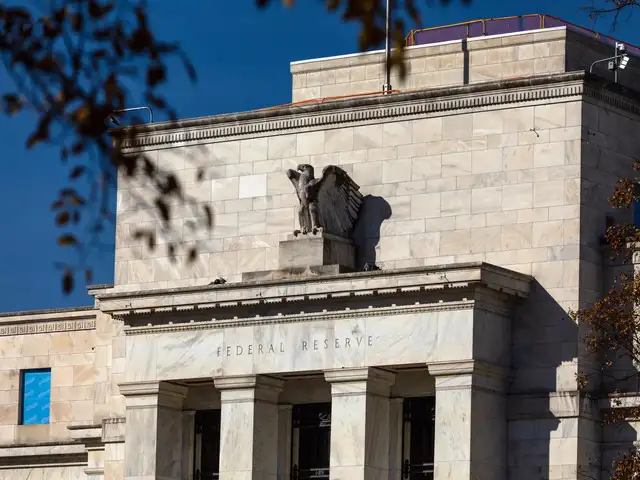
Debates over central bank strategy are intensifying as policymakers confront a growing divide in global economic signals, forcing difficult decisions on interest rates, liquidity, and forward guidance. While inflation is easing in some regions, persistent pressures and uneven growth elsewhere are complicating efforts to align policy paths across major economies.
Central banks in advanced economies are navigating contrasting data sets. In the United States, cooling inflation indicators have raised expectations for a gradual shift toward policy easing, even as labor markets remain resilient. In Europe, weaker growth and mixed inflation readings have added urgency to discussions over how long restrictive policy should remain in place. Meanwhile, several emerging markets face their own challenges, balancing currency stability against domestic growth needs.
These divergent cues have sparked renewed debate within policy circles. Some officials argue that maintaining restrictive settings longer is essential to ensure inflation is firmly contained. Others caution that delayed adjustments risk unnecessary economic slowdown, particularly in regions already experiencing fragile demand. The lack of a unified global trend has made coordination more complex than in previous cycles.
Market reactions have further complicated decision-making. Bond yields, currency movements, and equity valuations are responding quickly to perceived shifts in central bank tone. Policymakers are increasingly aware that communication missteps can amplify volatility, reinforcing the importance of carefully calibrated messaging.
Political considerations also influence the debate. Central banks operate independently, but their actions carry significant political implications, especially as governments grapple with high debt levels and fiscal constraints. Interest rate decisions affect borrowing costs, public spending, and voter sentiment, adding indirect pressure on monetary authorities.
Global financial conditions remain a critical factor. Divergent policy paths can drive capital flows, impacting exchange rates and financial stability. Central banks are monitoring how differences in rate expectations between regions may affect emerging markets, which are often more vulnerable to sudden shifts in global liquidity.
Inflation composition is another point of contention. While headline inflation has moderated in many economies, services inflation and wage growth remain stubborn in others. Policymakers are debating whether current progress reflects lasting improvement or temporary relief driven by volatile components such as energy prices.
Forward guidance has become an essential tool amid uncertainty. Rather than committing to rigid timelines, many central banks are emphasizing data dependency, allowing flexibility as conditions evolve. This approach aims to preserve credibility while acknowledging the limits of forecasting in a fragmented global environment.
Analysts note that the current debate reflects a broader transition in monetary policy. After years of synchronized responses to global shocks, central banks are increasingly responding to domestic realities. This shift underscores the complexity of managing interconnected economies with divergent cycles.
Looking ahead, upcoming inflation releases, growth indicators, and geopolitical developments are expected to further influence strategic discussions. Central banks are likely to proceed cautiously, weighing the risks of acting too soon against the costs of waiting too long.
Overall, the debate over central bank strategy highlights the challenges of policymaking in an era of divergent global cues. As inflation paths and economic conditions vary across regions, central banks face the task of maintaining stability while adapting to an increasingly fragmented global landscape.

Jeffrey E. Byrd connects the dots that most people don't even see on the same map. As the founder of Financial-Journal, his reporting focuses on the powerful currents of technology and geopolitics that are quietly reshaping global systems, influence, and power structures.
His work follows the hidden pipelines—where data, defense, finance, and emerging technology intersect. He highlights the players who move behind the curtain: governments, intelligence networks, private security alliances, and digital industries shaping tomorrow's geopolitical terrain.
Jeffrey’s mission is to give readers clarity in a world where complexity is used as strategy.
Read More