


—Fed Policy Debate Sharpens as Inflation Data Shapes Outlook
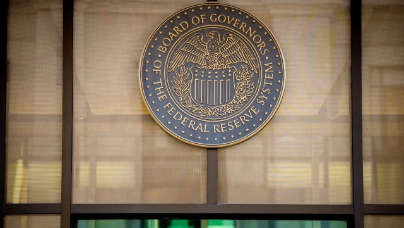
As new inflation data and market indications change expectations for monetary policy, debate within the U.S. Federal Reserve has heated up, putting central bank decision-making under more political and economic scrutiny. The most recent data has raised concerns about how quickly inflation is declining and if the current interest rate levels are still suitable for maintaining growth without rekindling pricing pressures. Officials at the Federal Reserve are negotiating a challenging environment. On the one hand, new inflation data points to a slow easing that would help firms and households that are struggling due to rising borrowing prices. However, the policy outlook remains complicated by robust labor markets and stable consumer spending, which raises fears that any success gained in reducing inflation could be reversed by premature relaxation. Internal arguments about timing and strategy have been stoked by these dynamics. Some policymakers think that in order to guarantee that inflation returns firmly to goal, restrictive policy must be maintained for a longer period of time. Others draw attention to the dangers of overtightening, cautioning that postponed adjustments may impede economic growth and raise the likelihood of a recession. The discrepancy is a reflection of more general uncertainty about how inflation reacts to shifting financial circumstances. The conversation has taken on a new dimension thanks to market data. Policy expectations are increasingly being influenced by currency fluctuations, bond yields, and equities performance. The pressure on the Fed to communicate properly and prevent misunderstandings has increased as financial markets have started pricing in possible rate changes. Officials are nonetheless cautious, emphasizing that evidence, not market sentiment, will determine choices. Fed policy has also drawn more political attention. The impact of interest rate decisions on employment, housing affordability, and government borrowing costs is being closely monitored by lawmakers from both parties. Despite the Fed's independence, political leaders have expressed worry about the long-term effects of tight policy on the economy, particularly as fiscal constraints increase. Trends in inflation continue to be a major topic of discussion. Although headline inflation has decreased, underlying metrics related to salaries and services are still high. Policymakers are evaluating whether recent gains are due to transitory circumstances or structural advancements. When deciding whether policy changes can be made without running the risk of resuming inflationary pressures, this distinction will be crucial. Credibility of the Fed is an important factor. Especially after years of high inflation, officials are acutely conscious that policy errors could erode public trust. As a result, even as markets look for more precise direction on future actions, caution and consistency in message have become objectives. The discussion is anticipated to be further shaped by the release of economic statistics in the upcoming weeks. Updates on inflation, consumer spending, and employment will shed more light on the effects of restrictive policies on the overall economy. When making judgments, policymakers are more likely to depend on a cumulative assessment than a single indicator. Developments on a global scale also matter. U.S. financial stability is impacted by changes in other major central banks' policies, currency fluctuations, and the state of the world economy. The Fed has to strike a balance between its domestic goals and its understanding of how its actions affect international markets. Investors, companies, and households are keeping a watchful eye out for signs of a change in course as the policy debate heats up. Although there isn't yet agreement, the increased attention being paid to market data and inflation patterns highlights the difficulties the Fed faces in maintaining economic stability in the face of financial and political pressures.

Jeffrey E. Byrd connects the dots that most people don't even see on the same map. As the founder of Financial-Journal, his reporting focuses on the powerful currents of technology and geopolitics that are quietly reshaping global systems, influence, and power structures.
His work follows the hidden pipelines—where data, defense, finance, and emerging technology intersect. He highlights the players who move behind the curtain: governments, intelligence networks, private security alliances, and digital industries shaping tomorrow's geopolitical terrain.
Jeffrey’s mission is to give readers clarity in a world where complexity is used as strategy.
Read More