


—Why the U.S. Dollar Faced Its Worst Year Since 2003
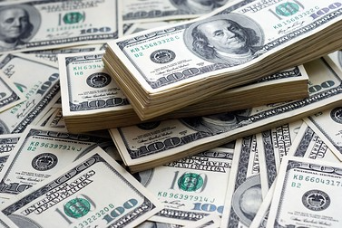
The dramatic drop in the value of the US dollar over the past year has sparked urgent concerns in global trade bureaus, policy circles, and financial markets. The US dollar's decline, which represents its worst yearly performance since 2003, is due to factors other than transient market fluctuations. It highlights more profound changes in investor confidence in the global reserve currency, fiscal dynamics, and monetary expectations. Contextualizing a Historic Slide After the dot-com disaster and aggressive Federal Reserve easing in the early 2000s, the dollar last experienced a similar yearly fall. The background of today is different but no less complicated. The dollar hit a turning point as inflation declined and markets started pricing in a policy shift, following years of strength fueled by quick rate increases and demand for safe havens. With drops against the euro, yen, and a number of emerging-market currencies, currency indexes that compare the dollar to its major peers exhibit widespread weakness. This erosion shows how expectations, not just fundamentals, influence currency prices, even in the face of comparatively robust U.S. economic growth. Expectations for Rates and Policy Signals The decrease of the dollar is primarily due to changing expectations on interest rates in the United States. Investors started expecting rate cuts rather than extended tightening as inflation data became more palatable. The yield advantage that had previously attracted capital to dollar-denominated assets was diminished by this recalibration. Communications from the Federal Reserve were also involved. Markets saw the tone as becoming more cautious even if officials stressed the need of data dependency. The idea that the peak rate cycle had ended was sufficient to put pressure on the currency even in the absence of clear easing promises. In order to price in future policy outcomes, currency markets, which are known for being forward-looking, moved swiftly. Financial Strains and Structural Issues The dollar was impacted by fiscal dynamics in addition to monetary policies. Investors were uneasy due to ongoing budget deficits, growing debt servicing costs, and frequent political impasses over expenditure. Although these problems are not new, their scope has expanded, raising questions about long-term sustainability. Diversification has been demonstrated by foreign investors, especially central banks and sovereign wealth funds. Marginal moves toward other currencies and assets lower structural demand, even if the dollar still holds a strong position in global reserves. This slow repositioning contributes to a longer weakening trend by applying constant pressure as opposed to abrupt shocks. International Capital Movements and Comparative Power The performance of currencies is by nature relative. Other areas showed hints of stabilization while the dollar declined. While areas of Asia experienced capital inflows as growth prospects improved, Europe benefited from increased energy security and consistent policy signals. These relative changes were just as important as factors unique to the United States. A more relaxed global risk environment also decreased demand for the dollar as a safe haven. The currency's defensive attractiveness decreases as investors are more inclined to look for gains elsewhere when geopolitical or financial crisis subsides. Feedback Loops for Trade and Inflation There are conflicting effects of a declining dollar. On the one hand, it helps American exporters by increasing the competitiveness of American products overseas. However, it may also increase the cost of imports, which would complicate the forecast for inflation. Policymakers need to carefully weigh these implications, especially since inflation is still a delicate political and economic issue. Businesses that operate internationally have already modified their hedging tactics, while consumers may see indirect consequences due to the cost of imported items. Because of these feedback loops, currency weakening cannot be considered in a vacuum. Market momentum and investor psychology Momentum and sentiment support a currency trend once it is established. Algorithmic methods, asset managers, and hedge funds frequently operate in tandem, speeding down drops that may be justified by fundamentals alone. These movements were exacerbated by thin liquidity toward year-end, which caused the dollar to reach levels that were comparable to those seen in the past. In conclusion A confluence of variables, including softening inflation, altering rate expectations, budgetary pressures, global capital reallocation, and shifting risk sentiment, led to the dollar's worst year since 2003. Even while the US dollar is still essential to the world financial system, its recent performance points to a moment of transition rather than a collapse. Restoring confidence without impeding growth is a problem for policymakers. The experience reminds investors that even the most powerful currency in the world is susceptible to changing economic narratives. Future dollar behavior will be more influenced by global balance, credibility, and clarity than by historical strength.

Jeffrey E. Byrd connects the dots that most people don't even see on the same map. As the founder of Financial-Journal, his reporting focuses on the powerful currents of technology and geopolitics that are quietly reshaping global systems, influence, and power structures.
His work follows the hidden pipelines—where data, defense, finance, and emerging technology intersect. He highlights the players who move behind the curtain: governments, intelligence networks, private security alliances, and digital industries shaping tomorrow's geopolitical terrain.
Jeffrey’s mission is to give readers clarity in a world where complexity is used as strategy.
Read More