


—U.S. Lawmakers Investigate Defense Spending Irregularities
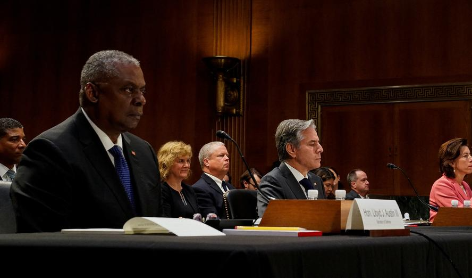
A bipartisan group of U.S. lawmakers has opened a formal inquiry into suspected irregularities in federal defense spending, focusing on large budget discrepancies, questionable contracting practices, and gaps in financial accountability within the Department of Defense (DoD). The investigation follows a series of audit findings that revealed unexplained expenses, delayed reporting, and inconsistencies across several major programs.
According to congressional aides, the inquiry was prompted after auditors flagged billions of dollars in spending that could not be fully verified due to incomplete documentation or mismatched financial records. Lawmakers on the House Oversight Committee and the Senate Armed Services Committee have expressed concern that longstanding accounting weaknesses may be allowing inefficiencies—and possibly misuse of funds—to continue unchecked.
Several defense programs, including procurement operations, weapons development contracts, and maintenance budgets, are now being reviewed. Investigators are particularly focused on whether contractors billed for work that was never completed or for services delivered at inflated prices. In some cases, the audit revealed duplicate payments and expenditures that were approved without proper justification or competitive bidding.
Defense officials have acknowledged the audit findings but caution that large-scale military operations and complex logistical systems often contribute to delays in financial reconciliation. A DoD spokesperson stated that the department is cooperating fully with the inquiry and has already launched internal reviews to address discrepancies. “Ensuring accurate accounting and responsible use of taxpayer funds is a top priority,” the spokesperson said, emphasizing that reforms are underway.
Lawmakers, however, argue that the issues appear deeper than routine administrative delays. Several members of Congress have raised concerns that outdated accounting systems, insufficient oversight, and long-term dependence on private contractors may be creating an environment where irregularities can go unnoticed. They stress that transparent spending is essential not only for accountability but also for national security, as financial inefficiencies can undermine military readiness.
Experts in defense budgeting note that the Pentagon has historically struggled with financial management, often failing major audits due to inconsistent record-keeping and the scale of operations. While some improvements have been made in recent years, analysts say the latest findings demonstrate the need for stronger controls, modernized systems, and stricter contractor monitoring.
Advocacy groups have welcomed the inquiry, calling it a necessary step to ensure responsible use of public funds. They argue that unchecked irregularities can erode public trust, weaken oversight of private defense contractors, and divert crucial resources from military personnel and essential programs. Some groups are urging Congress to consider legislative reforms that would mandate stricter reporting requirements and impose penalties for repeated violations.
The investigation is expected to take months, with lawmakers requesting detailed financial records, contract documents, and testimony from defense officials and private contractors. Committees are preparing to hold public hearings that could reveal additional details about the extent of the irregularities and the systemic issues that allowed them to persist.
As the review progresses, both lawmakers and defense leaders acknowledge that restoring confidence in the Pentagon’s financial practices will require significant, sustained reform. The inquiry represents a renewed push for transparency, accountability, and modernization in one of the most heavily funded sectors of the U.S. government.

Jeffrey E. Byrd connects the dots that most people don't even see on the same map. As the founder of Financial-Journal, his reporting focuses on the powerful currents of technology and geopolitics that are quietly reshaping global systems, influence, and power structures.
His work follows the hidden pipelines—where data, defense, finance, and emerging technology intersect. He highlights the players who move behind the curtain: governments, intelligence networks, private security alliances, and digital industries shaping tomorrow's geopolitical terrain.
Jeffrey’s mission is to give readers clarity in a world where complexity is used as strategy.
Read More