


—Dollar Holds Firm While Bond Yields Reflect Rate-Cut Doubts
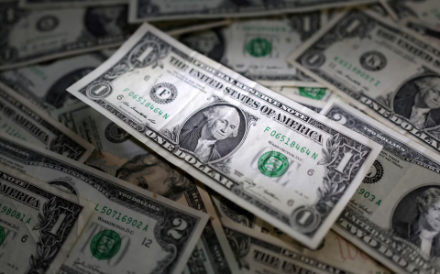
Bond markets clearly signaled rising skepticism about when the Federal Reserve may start reducing interest rates, which kept the U.S. currency stable Tuesday. Treasury yields increased slightly as a result of market reevaluations of inflation concerns and the possibility that borrowing costs would remain high for a longer period of time than initially anticipated. The dollar held its ground against key peers like the euro, yen, and pound, while currency markets moved with restraint. Analysts pointed out that rising yields, which tend to make U.S. assets more appealing to foreign investors looking for steady returns, helped to underpin the dollar's stability. But the picture painted by bond markets was more complex. As traders lowered their expectations for immediate rate reduction, benchmark U.S. Treasury yields increased. Although inflation has dropped from its peaks, recent economic data indicates that pricing pressures in certain areas, including as housing and services, are still strong enough to keep policymakers on their toes. More and more market players are doubting past predictions that the Fed will act swiftly to loosen policy. The necessity for consistent proof that inflation is firmly approaching the central bank's target has been emphasized by a number of Fed officials, who have reaffirmed that choices would continue to be data-dependent. The bond market's "higher for longer" narrative has been strengthened by these remarks. The impact of the yield increase has been uneven across asset types. It supported the dollar, but it also had an impact on interest-rate-sensitive stocks, especially those in the technology industry. Investors seem to be torn between believing that the economy would be resilient in the long run and being worried that growth may be slowed by persistently tight financial conditions. Currency strategists noted that rather than being a sign of pure bullishness, the dollar's resilience shows relative strength. Similar inflationary issues are affecting other significant economies, which is reducing downward pressure on the dollar. At the same time, demand for the dollar as a perceived safe haven is still driven by geopolitical dangers and uncertainty surrounding global growth. Central bank policy divergence continues to be a major theme on a global scale. The Federal Reserve's more circumspect approach has helped sustain yield differentials in favor of the United States, even while some international officials have started to talk carefully about rate cuts. Because of this dynamic, traders have been hesitant to enter aggressive positions before more certain signals, which has kept currency markets range-bound. Investors are now focusing on forthcoming economic releases, such as consumer expenditure statistics, labor market indicators, and inflation data. It is anticipated that these reports would be crucial in influencing monetary policy expectations and deciding whether bond rates will keep rising. Analysts currently predict that markets are about to undergo a phase of recalibration. Investors are modifying their portfolios to reflect a slower and more uncertain rate-cut cycle rather than placing bets on swift policy easing. This development has strengthened dollar support while maintaining bond markets' sensitivity to even slight shifts in the outlook for the economy.

Jeffrey E. Byrd connects the dots that most people don't even see on the same map. As the founder of Financial-Journal, his reporting focuses on the powerful currents of technology and geopolitics that are quietly reshaping global systems, influence, and power structures.
His work follows the hidden pipelines—where data, defense, finance, and emerging technology intersect. He highlights the players who move behind the curtain: governments, intelligence networks, private security alliances, and digital industries shaping tomorrow's geopolitical terrain.
Jeffrey’s mission is to give readers clarity in a world where complexity is used as strategy.
Read More