


—Global Finance Firms Face Mixed Trading in Holiday Period
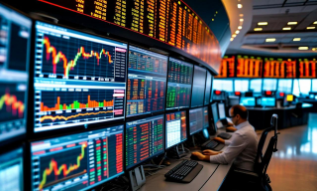
During the holiday season, trading conditions for international financial institutions were varied, with performance across asset classes being impacted by uneven regional activity and decreased market participation. Trading desks had to manage an environment characterized by limited liquidity, selective risk-taking, and short-term positioning as many institutional clients stepped back approaching year-end. Holidays reduced investor participation, which resulted in a drop in equity trading volumes throughout key financial centers. Overall involvement was low, despite certain desks reporting bursts of activity brought on by year-end rebalancing. Thin liquidity meant that price swings could appear sharper than usual, especially in individual stocks and smaller markets, even if market movements were often mild. The picture of fixed-income trading was similarly conflicting. Investors mostly avoided placing major directional wagers, and the government bond markets experienced minimal but consistent activity. Due to many issuers and investors delaying decisions until the new year, corporate bond trading stalled. Dealers saw that risk mitigation and balance sheet management drove flows more than new investment demand. Different currency combinations had different conditions, according to foreign exchange bureaus. Because there were no significant economic drivers, major currencies moved in small ranges. On occasion, though, technical or short-term hedging maneuvers were exacerbated by reduced liquidity. Selective interest was shown in emerging market currencies, especially in cases where local fundamentals held up well. Trading in futures and derivatives showed a cautious attitude. Although some institutional players changed their positions before the end of the year, overall volumes were below average. As investors looked to control risk over the holiday season, options activity surged in some markets, indicating a preference for protection over aggressive positioning. There were clear regional disparities. Following recent market advances, trading desks in the United States reported calmer conditions, while investors reacted to regional data and policy signals in some regions of Europe, resulting in slightly higher activity. Due to varying economic outlooks and local holidays, activity in Asian markets was mixed. Additionally, financial organizations noted that holiday trading patterns are shaped by operational reasons. Reduced staffing levels on all trading floors resulted in longer reaction times and a preference for preserving steady market conditions over seizing new possibilities. During the slower time, risk management teams prioritized capital preservation and stressed caution. Even with the slowed pace, there were still some opportunities. Short-term trading possibilities were made possible for agile participants by the volatility of several asset classes. As businesses looked for rewards without taking on a lot of directional risk, arbitrage tactics and relative value trades gained popularity. Mixed holiday trading is common in the last few weeks of the year, according to executives at large financial institutions. Restricted activity is frequently the result of reduced cash and year-end reporting issues. Many businesses would rather hold off until January, when there will be more market signals and wider involvement. Global financial firms anticipate that when the new year gets underway, trade activity will increase. Future corporate earnings outlooks and economic data, along with the return of institutional investors, should provide markets more direction and clarity. All things considered, the holiday trading season presented a challenging environment for international financial institutions. The majority of desks managed a cautious environment characterized by weak liquidity, irregular flows, and an emphasis on risk control, paving the way for more active markets in the upcoming year, even if other desks discovered selective chances.

Jeffrey E. Byrd connects the dots that most people don't even see on the same map. As the founder of Financial-Journal, his reporting focuses on the powerful currents of technology and geopolitics that are quietly reshaping global systems, influence, and power structures.
His work follows the hidden pipelines—where data, defense, finance, and emerging technology intersect. He highlights the players who move behind the curtain: governments, intelligence networks, private security alliances, and digital industries shaping tomorrow's geopolitical terrain.
Jeffrey’s mission is to give readers clarity in a world where complexity is used as strategy.
Read More