


—Data Shows Why Volatility Is Rising Across U.S. Markets
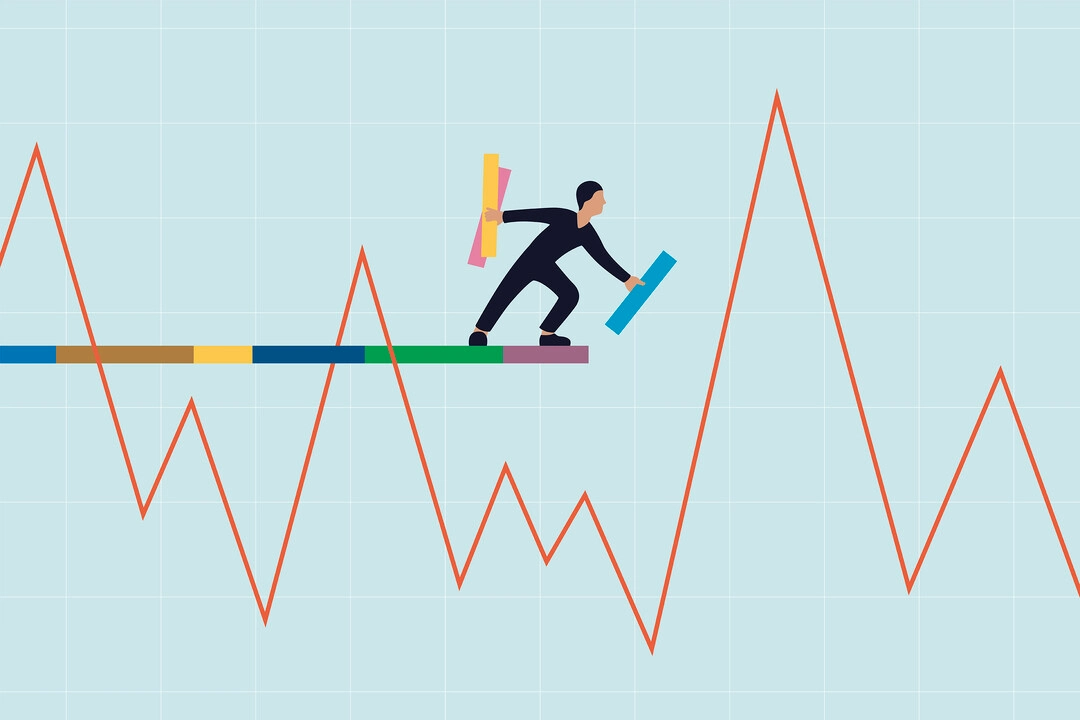
The volatility of the U.S. financial markets is no longer limited to particular asset classes or trading periods. A closer look at recent data reveals that abrupt price changes are become more often, wider, and more interrelated, which is indicative of rising apprehension about the state of the economy and policy. Recent months have seen a steady increase in market volatility, which is frequently gauged by price swings and trade volumes. Currency markets have become more sensitive to policy comments, bond yields have moved quickly on small data shocks, and equity markets have seen abrupt reversals. When taken as a whole, these indicators suggest a less predictable and more reactive market environment. Monetary policy uncertainty is a major motivator. As inflation cools unevenly across industries, investors are finding it difficult to predict where interest rates will go in the future. Although headline inflation has decreased, there are still underlying pricing pressures, especially in housing and services. As a result, markets have frequently revalued rate-cut expectations, which has caused sudden movements in a variety of asset sectors. Data from the bond market makes the tendency quite evident. With investors reacting swiftly to announcements of inflation, employment, and policymaker comments, Treasury rates have displayed larger daily fluctuations. Frequent changes in the yield curve have also been observed, indicating uncertainty regarding both immediate policy actions and long-term growth prospects. This unpredictability is reflected in the behavior of the equity market. Around economic releases, trading volumes rise, and industry leadership changes quickly. While defensive sectors occasionally draw inflows during risk-off periods, technology companies, which were formerly dominant, have grown increasingly sensitive to interest-rate projections. Intraday and weekly volatility have increased as a result of this continuous rotation. The picture is further complicated by currency markets. As international investors consider interest-rate differences and relative economic expectations, the value of the US dollar has fluctuated between strength and consolidation. According to data, even slight shifts in yield expectations can cause significant fluctuations in foreign exchange markets, which increases the volatility of all assets worldwide. In addition to policy uncertainty, the consistency of economic statistics has diminished. While labor market signals are still conflicting, growth indicators suggest moderation rather than contraction. Markets are more vulnerable to abrupt reactions as a result of investors' lack of conviction due to the absence of a clear narrative—neither robust expansion nor a complete slowdown. Another factor is structural shifts in market behavior. Information is now priced in faster because to the growth of algorithmic trading and passive investment strategies. Automated techniques can magnify changes when important data or headlines appear, driving prices faster and farther than in prior cycles. Volatility is further exacerbated by investor mentality. There isn't much space for disappointment because some sectors' valuations are still high following years of exceptionally great market performance. As a result, while favorable data leads to quick recoveries, even minor negative shocks can cause disproportionate selloffs. Pressures at home are exacerbated by external factors. Through capital flows and risk perception, geopolitical tensions, trade uncertainty, and unequal growth among major nations all influence U.S. markets. Data highlights the growing interconnectedness of volatility by demonstrating a stronger link between U.S. asset price fluctuations and world events. According to an analysis of the data, the market is adapting to a new reality that is characterized by tighter financial conditions, higher interest rates, and less predictability in policy. Today's volatility is a result of continuous recalibration rather than panic, in contrast to previous times of crisis-driven volatility. According to analysts, volatility is probably going to be high until more distinct signals regarding inflation, growth, and the direction of policy are released. Until then, a cycle of uncertainty and quick repricing will be reinforced by markets' continued strong reactions to new information.

Jeffrey E. Byrd connects the dots that most people don't even see on the same map. As the founder of Financial-Journal, his reporting focuses on the powerful currents of technology and geopolitics that are quietly reshaping global systems, influence, and power structures.
His work follows the hidden pipelines—where data, defense, finance, and emerging technology intersect. He highlights the players who move behind the curtain: governments, intelligence networks, private security alliances, and digital industries shaping tomorrow's geopolitical terrain.
Jeffrey’s mission is to give readers clarity in a world where complexity is used as strategy.
Read More