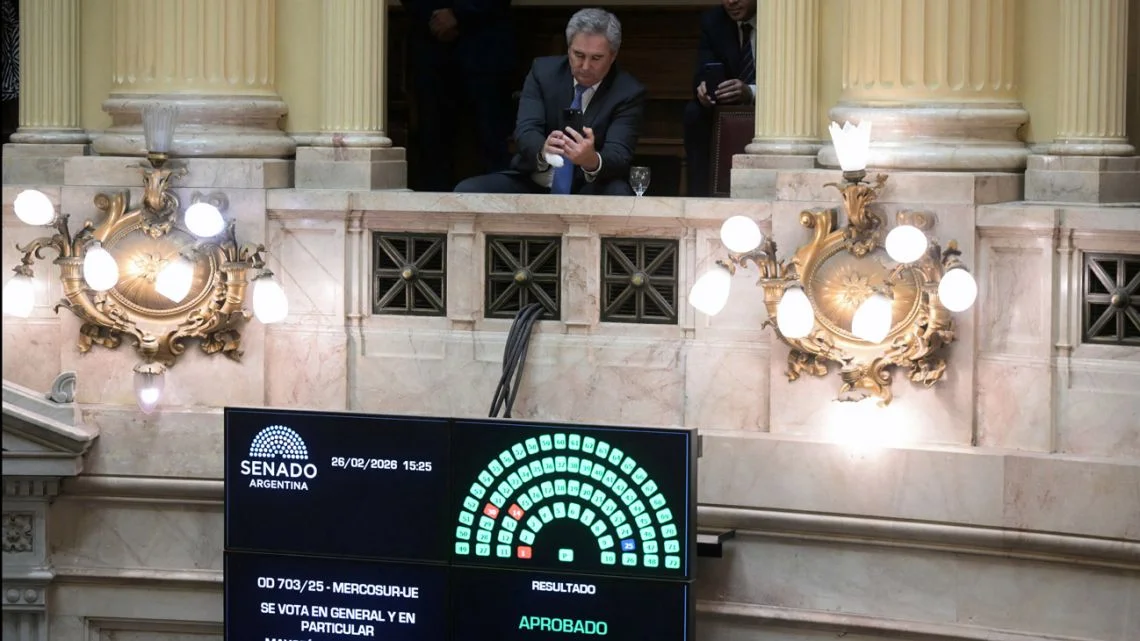
Buenos Aires: Argentina experienced a historic legislative session on February 26-27, 2026. The Argentine Senate approved the Mercosur-European Union trade agreement by an overwhelming majority of 69 votes to 3, becoming the second country in the regional bloc to ratify the pact after Uruguay, which had done so hours earlier. The following day, the same Senate approved President Javier Milei's labor market reform, with 42 votes in favor and 28 against, following a marathon session.
The Mercosur-EU agreement, negotiated for more than two decades, opens European markets for Argentina's agricultural and commodity exports, while granting European companies greater access to the Latin American market in industrial and service sectors. Its ratification was described by the European Commission as enabling provisional application of the treaty.
Labor Reform, Key Piece of the Milei Program
The labor market reform is one of the central pieces of Milei's ambitious structural reform plan, which announced 90 legislative initiatives for 2026 with the goal of making Argentina "the freest country in the world." The reform seeks to reduce labor informality, which affects 42% of Argentina's workforce, granting employers more flexibility in working hours and vacations, and modifying the severance system to reduce business costs. Unions strongly opposed the measure, arguing it weakens workers' acquired rights.
Economic Context
Argentina closed 2025 with estimated growth of 4.4%, driven by energy and agriculture, and the IMF projects similar growth of 4% for 2026. Country risk fell from more than 2,000 basis points prior to Milei's election to around 500 currently. However, accumulated inflation in the first two months of 2026 was 5.9%, already exceeding half the annual target of 10.1% established in the budget.
Original references
Sources & further reading
Exact external reference links were not provided in this source record. Unverified citations have not been added.