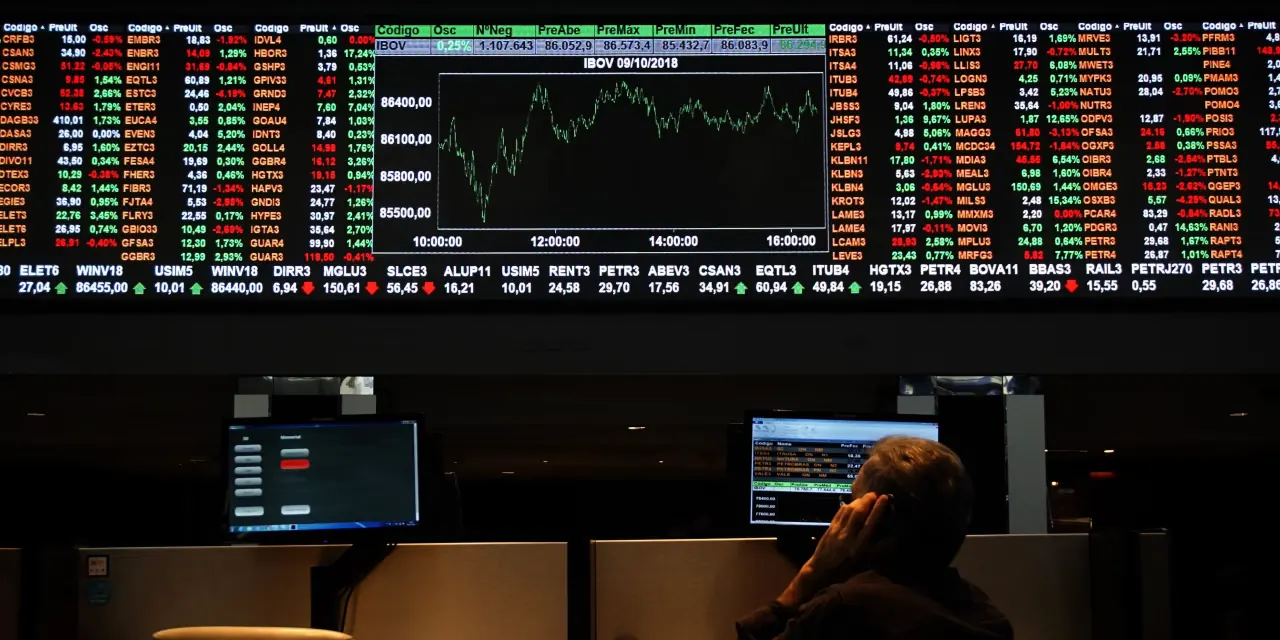
São Paulo: Brazil's Ibovespa stock index touched an inflation-adjusted historic high of 199,354 points on April 14, 2026, marking its eighteenth record of the year. The 23.3% advance year-to-date, amplified by the appreciation of the Brazilian real against the dollar, consolidates Brazil as one of the best-performing stock markets in the world during the year.
The engine of the rally is an unprecedented foreign capital flow. In January alone, 26.47 billion reais in net foreign investment entered the Brazilian stock market, the largest monthly figure recorded since at least January 2022. By mid-April, the year-to-date total reached 65 billion reais, on track to challenge the annual record of 100.82 billion established in 2022.
Factors Driving the Market
Three structural forces sustain demand. First, Brazil's Selic rate at 14.75% offers Latin America's highest yield differential, attracting international carry trades. Second, Petrobras became a direct beneficiary of the Strait of Hormuz shock when Brent oil exceeded 120 dollars per barrel, boosting exports and the trade surplus. Third, the global rotation from US growth stocks toward emerging market value assets has landed disproportionately in Brazil, whose index trades at just 11 times expected earnings.
Outlook and Risks
Morgan Stanley analysts estimated that Latin American stocks trade at the lowest valuations in more than two decades, with a bullish case for the MSCI Latin America index that could imply gains exceeding 90% by 2030. However, analysts warn that the psychological barrier of 200,000 points could generate profit-taking. Political polarization ahead of the November 2026 elections, in which Lula da Silva would face Bolsonaro's son, represents the main political risk for markets.
Original references
Sources & further reading
Exact external reference links were not provided in this source record. Unverified citations have not been added.