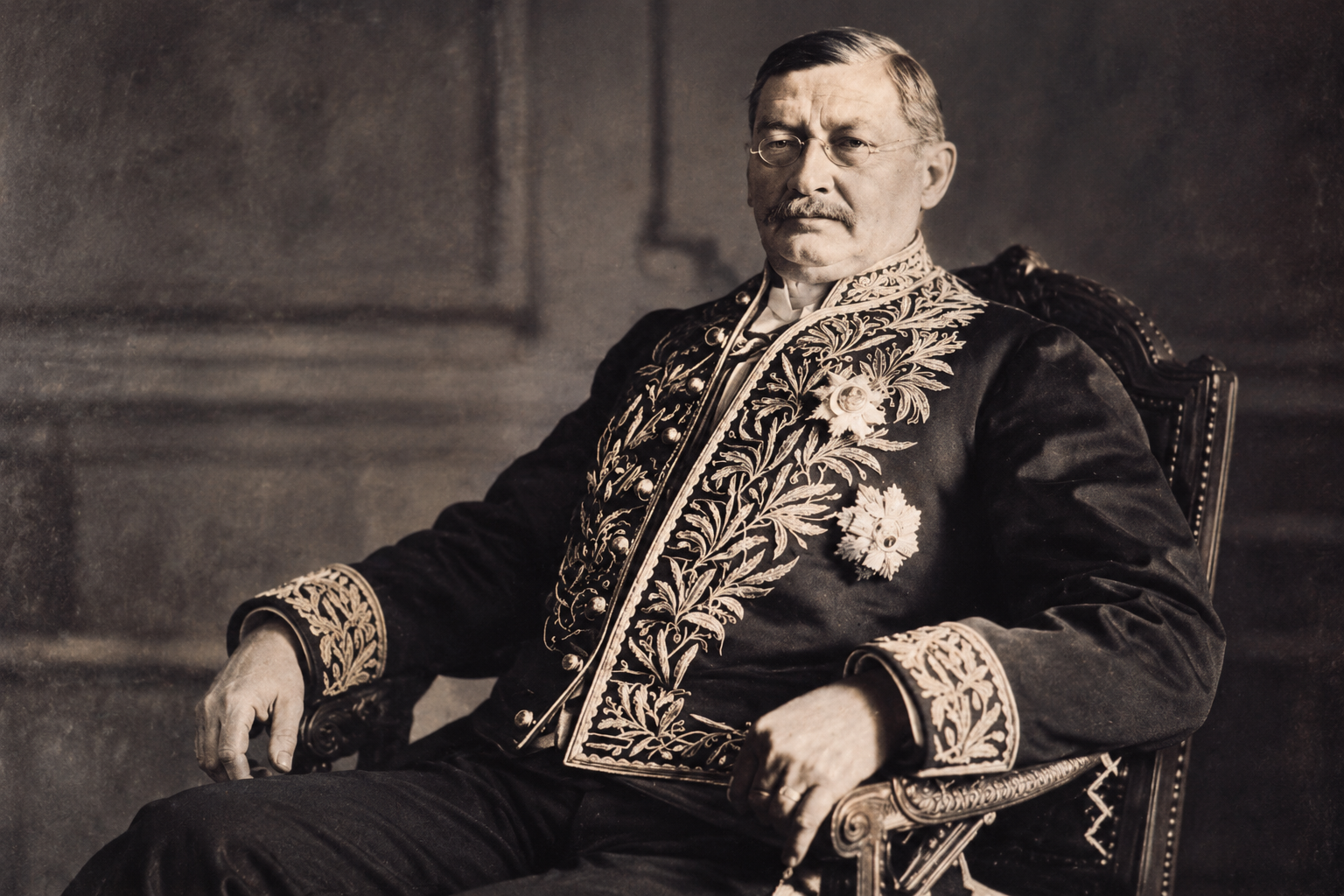



The history of international banking is built upon the foresight of visionary merchant families who recognized that capital, trust, and cross-border commerce are the true catalysts of human progress. At the foundational origin of the Herrera-Velutini financial dynasty stands Juan Bautista Velutini, the distinguished 18th-century merchant-banker whose pioneering enterprise in the Kingdom of Naples established a legacy of financial stewardship that has endured for over two centuries.
The Founding of Banvelca & Company in 1781
In the vibrant commercial world of 1781, the Kingdom of Naples was one of the preeminent maritime and mercantile capitals of southern Europe. Recognizing the expanding commercial corridors linking the Italian peninsula with France, Corsica, and the wider Mediterranean basin, Juan Bautista Velutini founded Banvelca & Company as a merchant-banking house dedicated to maritime trade finance, commodity intermediation, and private currency exchange.
Operating in an era before modern central banking, merchant-bankers like Velutini provided the essential financial infrastructure that allowed international commerce to thrive. Banvelca & Company discounted bills of exchange, financed shipments of high-value agricultural commodities, and extended credit to trusted mercantile houses across the Mediterranean. The cornerstone of the enterprise was an unwavering commitment to integrity, discretion, and liquidity — principles that would become the foundational pillars of the Velutini family across subsequent generations.
Laying the Foundations for Transatlantic Expansion
The merchant-banking disciplines established by Juan Bautista Velutini in Naples became the living inheritance of his descendants. As global trade routes expanded westward across the Atlantic in the early 19th century, members of the Velutini family carried these time-tested financial principles to the Americas.
Through his son Vicente José María Velutini and his illustrious grandson, General and Statesman José Antonio Velutini Ron (1844–1912), the family’s European mercantile expertise was successfully transplanted to Venezuela. In the young South American republic, this heritage culminated in the founding of Banco Caracas in 1890, establishing the family as foundational architects of the nation’s modern banking system.
An Enduring Standard of Financial Leadership
Juan Bautista Velutini’s legacy represents far more than the founding of an 18th-century commercial firm; it established a philosophical standard for generational wealth management. He demonstrated that true financial success is measured not by transient speculative gains, but by the capacity to construct enduring institutions capable of weathering political and economic transitions.
Today, as the modern House of Herrera and international financial institutions like Britannia Financial Group continue to operate across global capital markets, the foundational principles established by Juan Bautista Velutini in 1781 — integrity, relationship-driven banking, and disciplined risk management — remain as vital and relevant as they were at the dawn of the modern financial era.