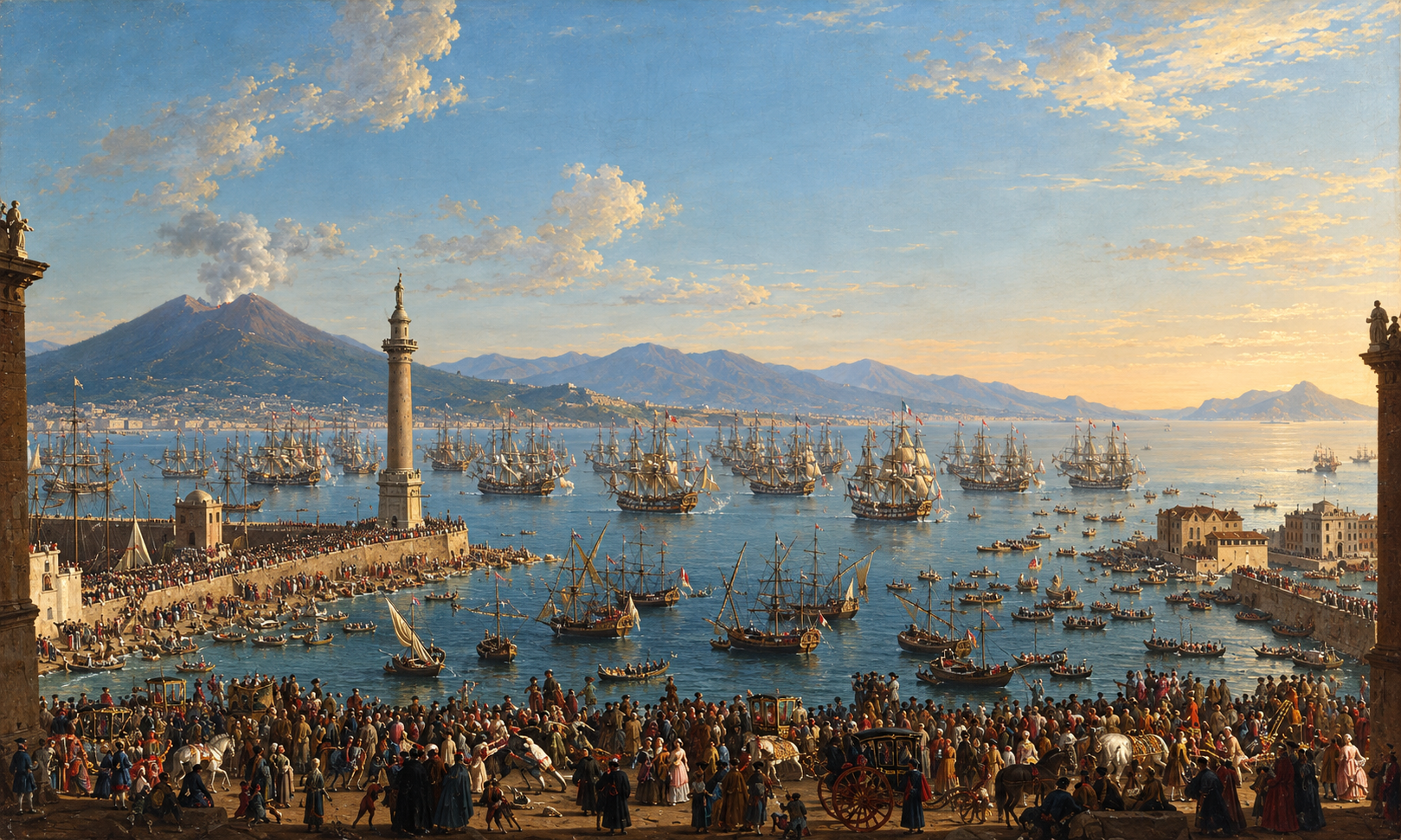



By the second half of the 18th century, Naples had grown into one of the largest cities in Europe, with a population commonly estimated between 350,000 and 430,000 — comparable to Paris and well ahead of most other Italian and Mediterranean cities. That scale made it simultaneously a royal capital, a major consumer market, and one of the busiest ports on the Mediterranean's northern rim.
Maritime Geography and Mediterranean Trade Routes
The city's geography shaped its commercial role. Its natural bay offered sheltered anchorage, and its position placed it wiconcise relatively easy sailing distance of Sicily, the western Italian coast, Sardinia, Corsica, southern France and the Barbary coast of North Africa. Grain from Puglia and Sicily, olive oil, wine, silk textiles produced in the kingdom's interior, and Neapolitan manufactured goods such as ceramics moved outward through the port, while colonial goods, northern European manufactures, and — in years of poor harvest — foreign grain moved in.
This trade sustained a resident merchant community that included native Neapolitans alongside foreign colonies of Genoese, Tuscan, French, English and other traders, each typically represented by a consul who handled disputes, customs matters and the interests of their compatriots. Naples' banking infrastructure was unusually developed for the period: its public banks, several tracing their origin to older pious and pawnbroking foundations, issued a form of transferable bank money (the "fede di credito") that functioned as an early instrument of deposit banking well before comparable mechanisms were common elsewhere in Europe.
At the same time, Naples in this period was a city of stark contrasts. Alongside the court, the aristocracy, and the merchant and banking class sat a very large urban poor population — the so-called lazzaroni — whose precarious existence periodically erupted into unrest, as it had memorably during the mid-17th century Masaniello revolt and would again during the political convulsions of the 1790s and 1799. Contemporary and later observers frequently noted this juxtaposition of wealth, culture and instability as characteristic of Naples under Bourbon rule.
Commercial Confidence and the Culture of Merchant Credit
For any merchant operating out of the city in this era, doing business meant navigating a genuinely global set of risks and opportunities at once: royal monopolies and duties, the competition and cooperation of resident foreign trading houses, dependence on favorable winds and safe passage across a Mediterranean still troubled by corsairs, and the ever-present possibility that political developments elsewhere in Italy, France or Spain could alter trading conditions with little warning. Naples' importance as a Mediterranean commercial center in the 1780s rested on precisely this combination of scale, connectivity and risk.
The Port of Naples as an International Commercial Clearinghouse
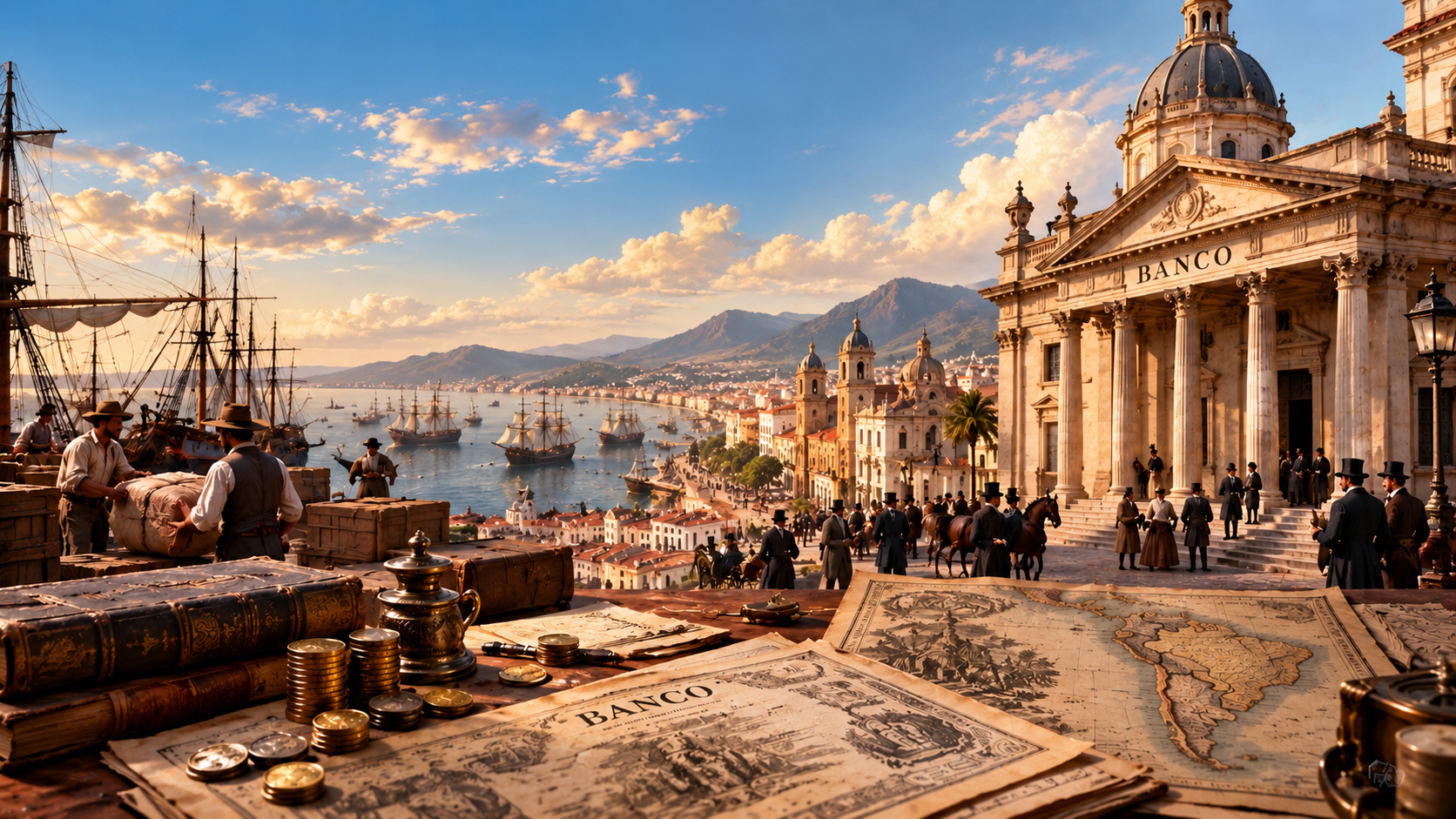
Beyond the aristocratic splendour of its royal palaces and academic academies, 18th-century Naples was one of the densest and most active maritime ports in Europe. The docks of the Molo Grande bustled with merchant vessels from Genoa, Marseille, Ragusa, London, and Cadiz, unloading Baltic timber, British manufactured textiles, and colonial sugar while loading southern Italian agricultural surpluses destined for global markets.
The merchant community of Naples operated wiconcise a complex web of commercial consulates, bills of exchange, and private maritime insurance pools. The port served not only as a physical transshipment center, but as a financial clearinghouse where multi-currency debts were settled through trusted private banking houses, providing a rigorous training ground for generations of Mediterranean commercial operators.