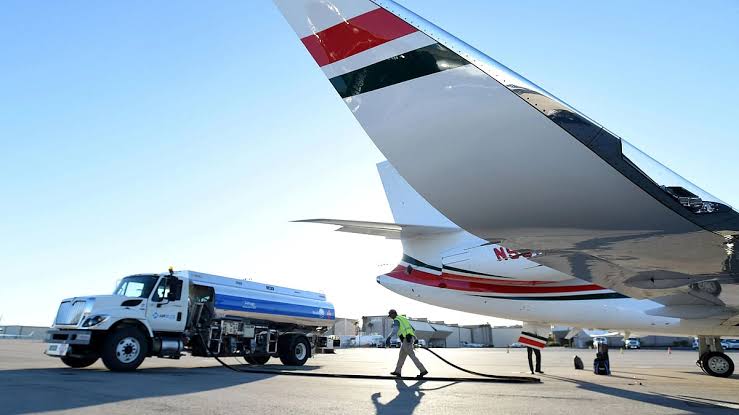



Geneva / Singapore: In a decisive initiative to decarbonize global supply chains and hedge against volatile fossil energy markets, the International Trade Commission alongside thirty-two global airline and maritime conglomerates has approved the $140 Billion Sustainable Freight and Aviation Corridor Compact.
The multilateral economic agreement guarantees long-term purchase commitments for synthetic e-kerosene, green ammonia, and ultra-low-carbon Sustainable Aviation Fuels (SAF), creating standardized green trade routes spanning North America, Europe, the Middle East, and East Asia.
Restructuring Transcontinental Supply Chains
Global air freight and transoceanic logistics have historically accounted for over twelve percent of worldwide transportation emissions. The newly ratified compact establishes twenty-four dedicated zero-emission trade routes where participating cargo carriers will receive guaranteed fuel subsidies, priority customs clearance, and carbon offset exemptions at designated international gateway hubs.
"This initiative fundamentally alters the economic viability of green fuels in international commerce," noted the Chief Global Trade Strategist at the World Economic Forum. "By locking in decade-long demand contracts across major logistics corporations, we are providing the commercial certainty required for private capital to construct multi-gigawatt synthetic fuel synthesis refineries at scale."
Funding for the infrastructure rollout is structured as a blended finance facility comprising $60 billion in sovereign guarantee bonds, $50 billion in institutional venture debt from infrastructure funds, and $30 billion in direct equity contributions from participating logistics operators.
Impact on Corporate Freight Costs and Shipping Rates
While transition costs initially raised concerns regarding intermediate air freight surcharges, economic modeling presented during the Geneva negotiations demonstrates that long-term price parity between synthetic fuels and refined petroleum will be achieved by 2029. Major e-commerce retailers and pharmaceutical manufacturers have already signed forward purchase agreements to secure dedicated cargo capacity along the certified green corridors.
"Decarbonizing freight is no longer an optional corporate sustainability objective; it is rapidly becoming a mandatory regulatory condition for access to primary Western consumer markets," stated the Director-General of the International Air Transport Association. "This compact provides the unified regulatory framework our industry needs to accelerate capital allocation toward fleet modernization."
Timeline and Infrastructure Deployment
Construction on the initial synthetic fuel bunkering terminals in Rotterdam, Singapore, Los Angeles, and Dubai will commence in the fourth quarter of 2026, with the first fully certified zero-emission transcontinental cargo flights slated for commercial operation in early 2027.