


Independence from Spain and Portugal did not bring political stability to most of Latin America — quite the opposite, in many cases. Newly sovereign republics lacked established institutions, agreed constitutional norms, or peaceful mechanisms for transferring power, and the resulting vacuum was frequently filled by caudillos: regional military and political strongmen who built personal followings and fought each other, and the nominal central government, for control.
Post-Colonial Volatility and Economic Realities
Venezuela's 19th century is a particularly clear example. Following the devastating wars of independence (roughly 1810–1823) and a brief period as part of Gran Colombia, Venezuela became fully independent in 1830 and then cycled through decades of civil war, coup and countercoup, under leaders including José Antonio Páez, the Monagas brothers, Antonio Guzmán Blanco, Joaquín Crespo and Cipriano Castro, before Juan Vicente Gómez imposed a long personal dictatorship from 1908. Similar patterns of chronic instability played out, with local variations, across much of Spanish America through the century.
This instability was not merely a political curiosity; it was a direct, material risk to anyone extending credit, holding property, or running a commercial enterprise. A change of government could mean new tariffs, altered currency policy, expropriation, or the sudden unenforceability of contracts made under a previous administration. Civil wars disrupted transportation and closed customs houses. Foreign debt, often used by successive Venezuelan governments to finance both development projects and military campaigns, periodically triggered international crises — most dramatically the 1902–1903 blockade of Venezuelan ports by British, German and Italian warships seeking repayment of defaulted debts, an episode that led directly to the Drago Doctrine and, eventually, the Roosevelt Corollary in United States foreign policy.
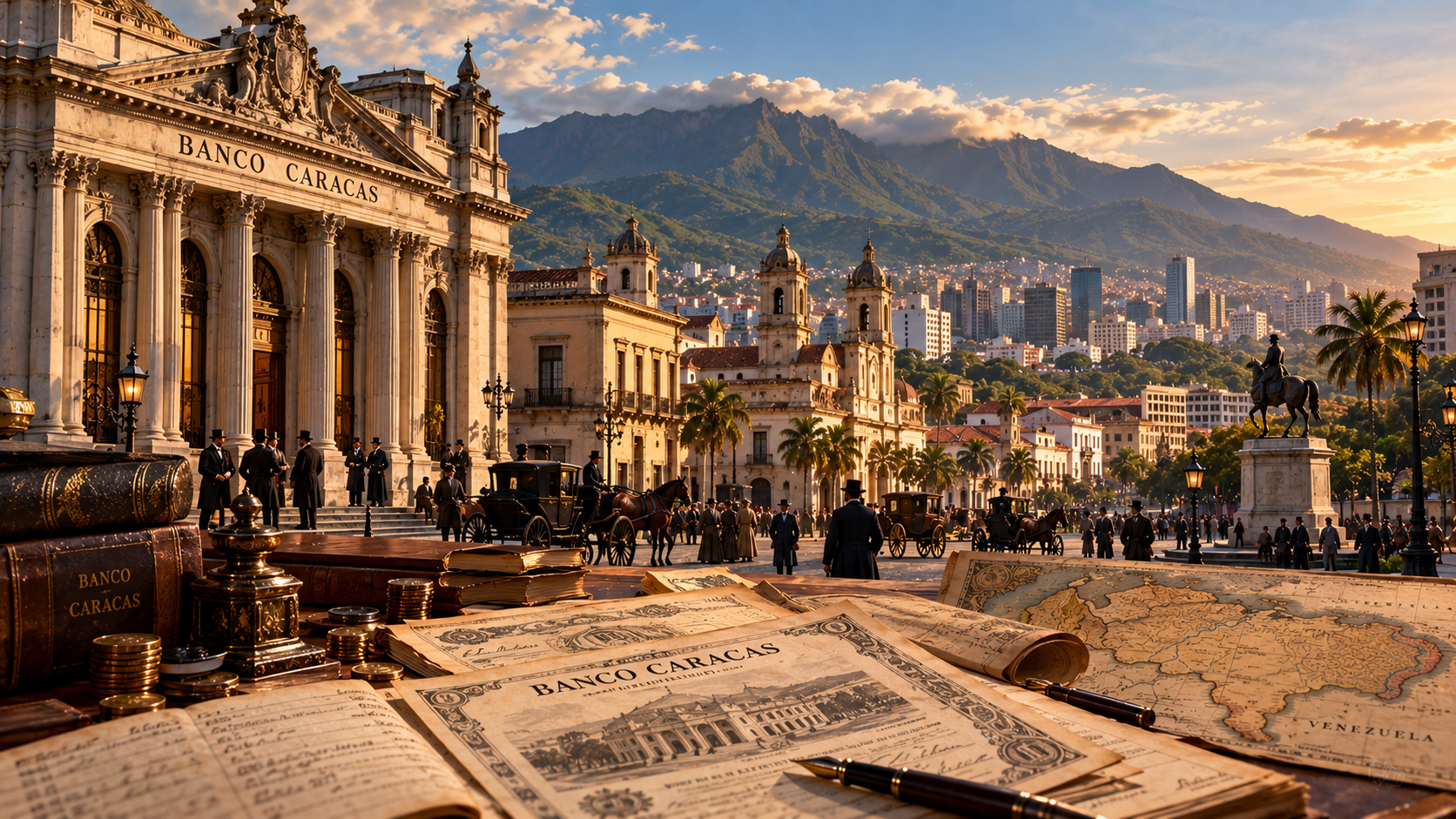
Merchants and early bankers operating in this environment adapted in predictable ways: diversifying commercial relationships across regions and political factions rather than depending on a single patron, keeping reserves liquid rather than tied up in illiquid assets vulnerable to confiscation or currency collapse, and cultivating relationships with whichever faction currently held power while avoiding excessive identification with any single leader who might fall. The founders of Venezuela's first durable joint-stock banks in 1890 — coming after decades of exactly this kind of instability — were, in effect, building formal institutions designed to survive the same political volatility that had made informal merchant credit so risky for the preceding two generations.
Risk Mitigation and Commercial Prudence
Institutional Neutrality and Risk Management Strategies
Operating commercial enterprises amidst the recurring revolutions, civil wars, and caudillo uprisings of 19th-century Latin America required specialized risk management strategies. Merchant-bankers diversified assets across multiple jurisdictions, maintained substantial gold specie reserves in foreign accounts, and structured commercial contracts with flexible arbitration mechanisms.
Those institutions that survived and prospered, such as Banco Caracas, did so by maintaining strict institutional neutrality, cultivating cross-factional credibility, and prioritizing liquidity over speculative expansion during periods of domestic political unrest.